

Fence Installation Ponte Vedra FL
Jax AA Fencing handles fence installation in Ponte Vedra, FL for homeowners whose back lot line runs up against protected ground. We are veteran owned, the owner served nine years in the Army, and the crew builds aluminum, vinyl privacy, wood, and pool fencing across the newer neighborhoods spreading out along the Nocatee Parkway and CR-210. A good share of the lots we quote in northeastern St. Johns County carry a recorded conservation easement or a wetland buffer across the rear, and that changes where a fence can legally stand, so we read the plat before we put a number on anything. Full fence replacement is part of what we do, estimates are free and happen on site, we are licensed and insured, and right now any job over $2,000 gets $250 off.
Your Yard Probably Ends Before the Grass Does
The rear boundary on a Ponte Vedra lot is rarely where the sod stops. Builders sod out to whatever looks like a natural break, a tree line, a lagoon bank, or the edge of a preserve tract, and homeowners reasonably assume that break is the boundary. The recorded plat often says something else. Protected ground is everywhere on this side of the county, from the Guana preserve area down to the small conservation tracts platted inside individual subdivisions, and it is that second kind that shows up on a homeowner’s paperwork. Some lots stop several feet short of the visible edge because the developer platted the preserve as its own tract with its own owner, and others reach into it but carry an easement that bars permanent structures. Either way, the mowed line is a landscaping decision, not a legal one.
Most of the housing on this side of Palm Valley went up in the last twenty years, so the first round of builder fences is now due for replacement, and a fair number of them were set in the wrong place to begin with. We find privacy panels standing inside a platted upland buffer, back corners that swing well into a drainage easement, and gates hung across an access easement the HOA still has every right to use. Those fences look fine until somebody with authority looks at a plat. Rebuilding the same line in the same spot only restarts the clock on the violation letter.
Where the Easement Line Falls Decides Where the Fence Goes
A conservation easement is a recorded restriction on the land itself, and it outranks anything your landscaping or your memory of the sales-center map suggests. It rides with the deed, it appears on the subdivision plat as a call-out with bearings and distances, and it generally prohibits clearing, filling, and permanent structures inside its limits. A fence is a permanent structure. That is the entire problem in one sentence. On a preserve lot we pull the recorded plat and the survey together and tie the easement calls back to the corner monuments actually in the ground, because a dimension on paper does nothing for you until it is staked in the yard. Then we sort out which line governs, and there are usually three competing for the job. Zoning setbacks control how close a house sits to the boundary and often do not restrict a fence at all. A drainage or utility easement will usually let you fence across it, but the holder can pull the fence out to get at what is buried there and owes you nothing for putting it back. A conservation easement or wetland buffer typically allows nothing, and its edge frequently sits inside your lot rather than at the property line. We hold the run on the buildable side of the tightest of the three with working room to spare, so no post hole ends up two inches into the wrong side of a line, and where that gets tight we jog the corner and shorten the run instead of chasing the last few square feet. Most installs still wrap in 1 to 2 days, and vinyl and aluminum carry a limited lifetime manufacturer warranty.
Materials That Clear a Preserve-Line Review
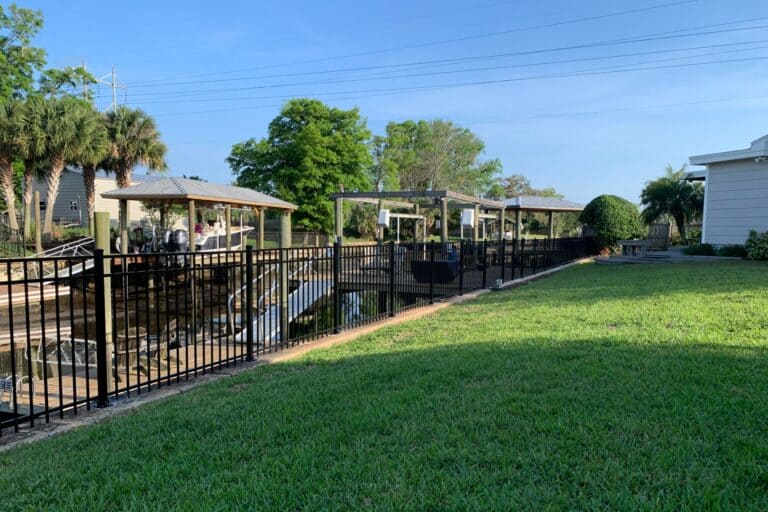
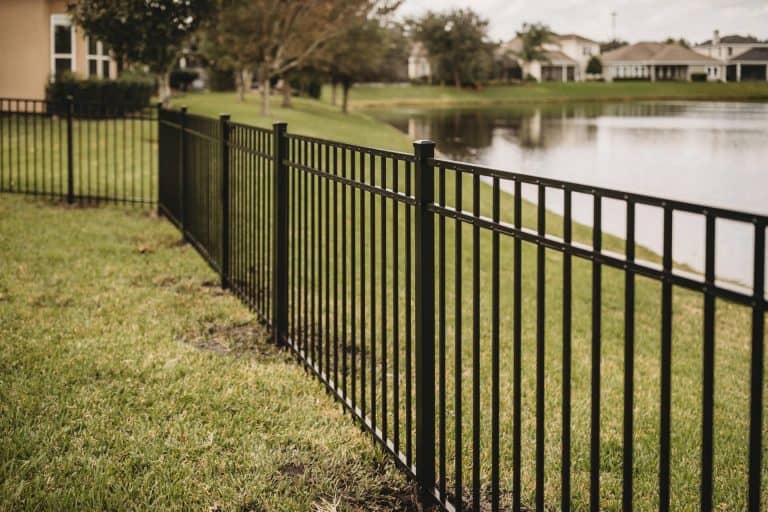
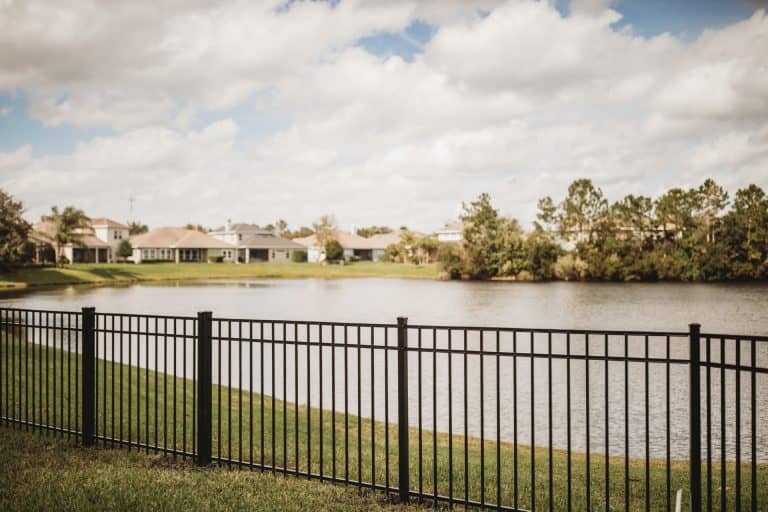
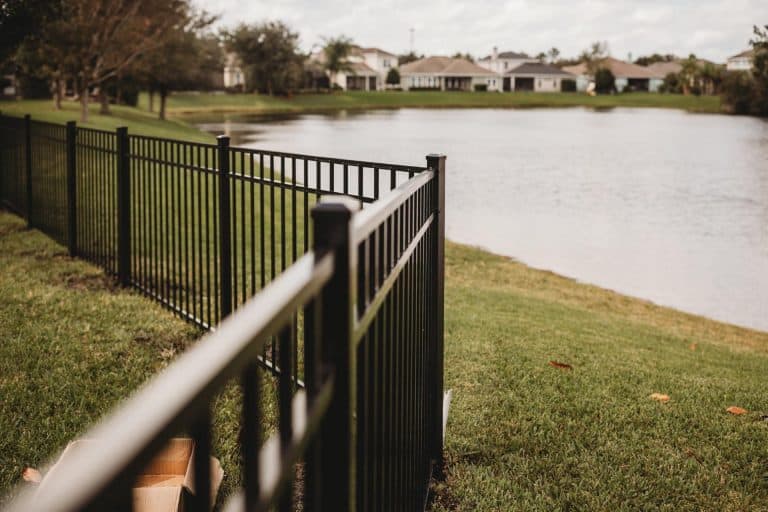
Open-picket aluminum is the default along a preserve or lagoon edge, and often it is the only thing that gets approved there. Community guidelines in this part of the county tend to require a fence you can see through on any line facing protected ground, partly so wildlife can move and partly so the preserve still reads as one continuous piece from the common areas. Black aluminum fences satisfy that, they meet Florida pool barrier code, and they do not dam the sheet flow that a buffer exists to carry.
Vinyl privacy belongs on the interior lines, between you and the neighbor, where no easement is in play. A vinyl privacy fence gives you a usable back yard without paint or stain, comes in the neutral colors most boards here approve, and is backed by a limited lifetime manufacturer warranty on US-made material.
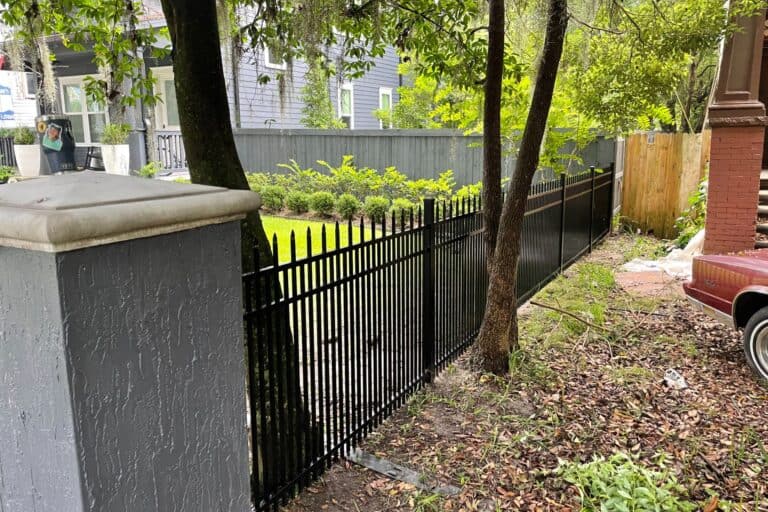
Wood still gets approved on plenty of streets, usually with a specified board style and stain. A wood fence built with real pickets and our post spec outlasts the thin builder version by years, though we will tell you plainly if your section restricts it or if your rear line faces a buffer where solid panels are off the table.
When the fence needs to match the house rather than just enclose the yard, we install premium fence styles with upgraded profiles and decorative gates, including combinations that run privacy along the sides and open picket across the back.

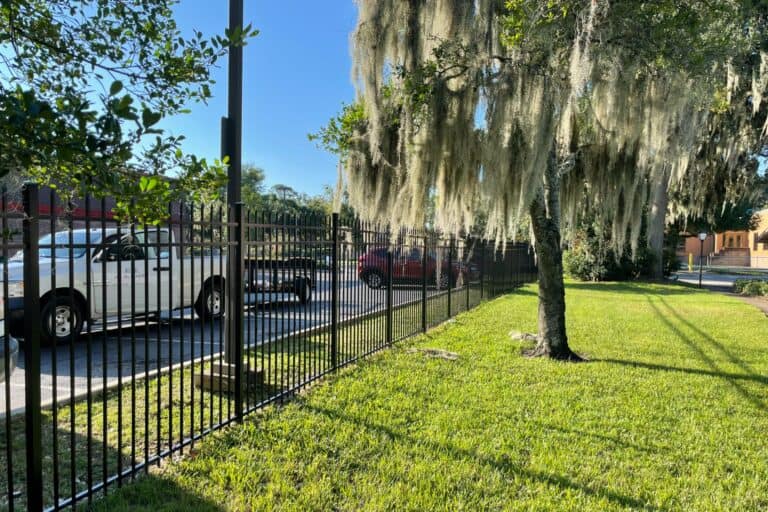


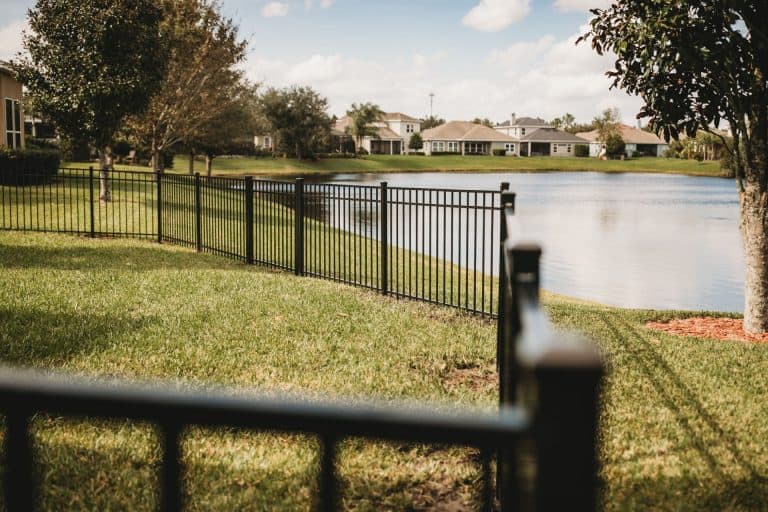
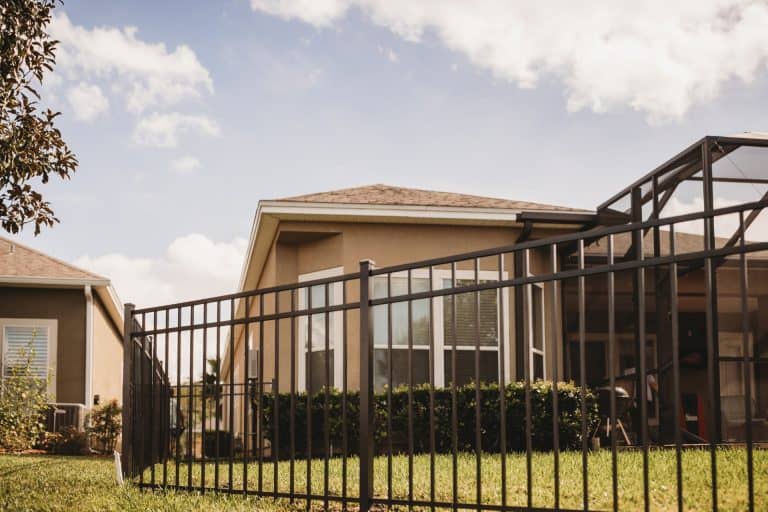


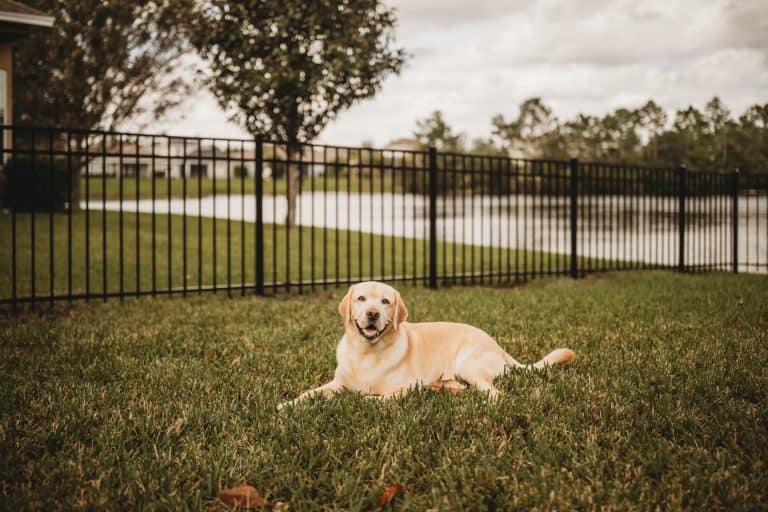
Preserve Lots, Family Back Yards, and Community Common Areas
Residential
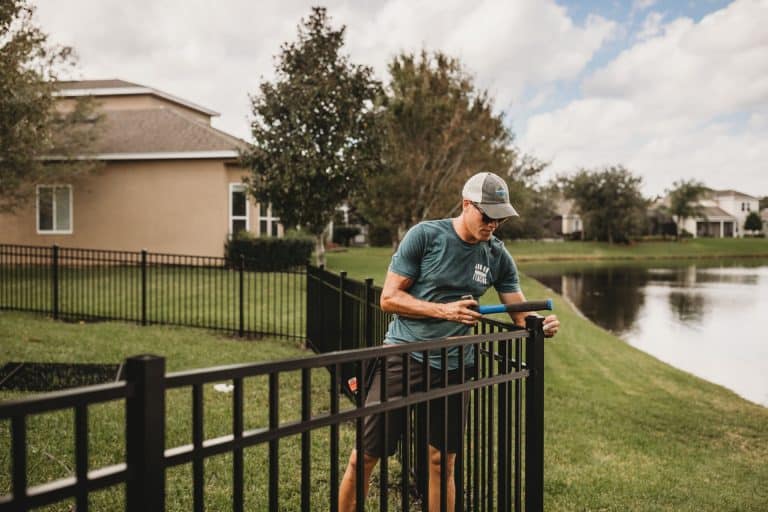
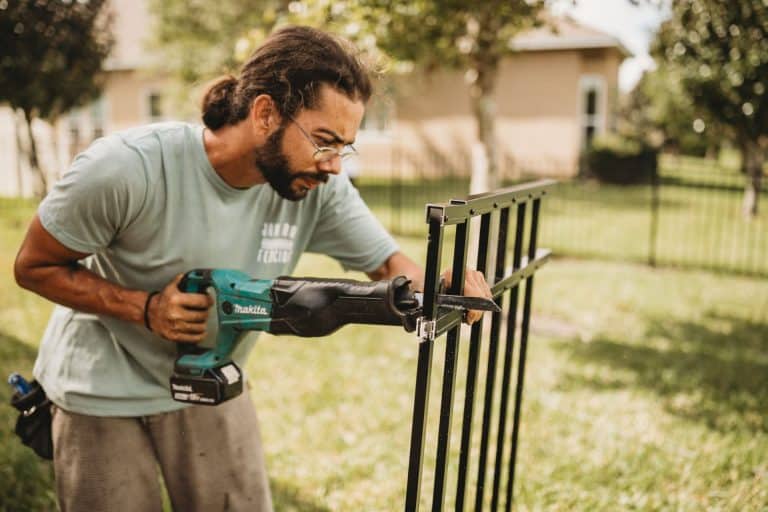
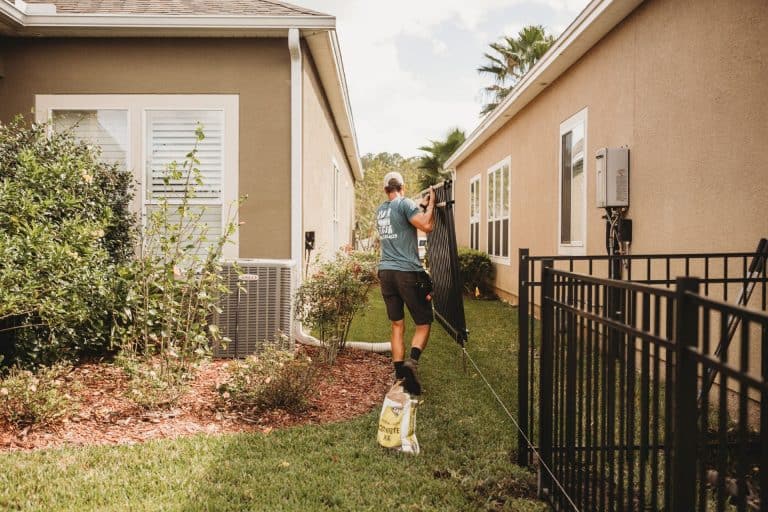
Most of our work here is residential fencing on lots that back onto something protected. That means open aluminum across the rear where a buffer or preserve tract sits, vinyl privacy down the sides, and pool barriers for families who added a pool after closing. Every one of those jobs starts with the plat, because the answer to what you can build changes the moment an easement crosses your back line. We build throughout the county, and the St. Johns County fence page covers the rest of the areas we cover.
Commercial
We also fence common areas, amenity centers, and small commercial sites in northeastern St. Johns County, where the easement question comes up even more often than it does on a house lot. Stormwater tracts, lift stations, and preserve parcels all carry recorded restrictions, and an HOA board or property manager usually needs a contractor who will check them rather than assume. Same crews, same licensed and insured coverage, scaled to a commercial schedule.
Fence Installation in Ponte Vedra Starts With the Recorded Plat
The estimate. We walk the property with you, find the corner monuments, and compare what is in the ground to what the plat shows, then quote on the spot with nobody pushing you to sign. If your back line touches a preserve tract or a lagoon bank, we tell you right there what that does to your options, because it is better to hear it before you have a style picked out. For common areas, rentals, and board-managed property, our HOA and property management fencing page explains how those approvals and submissions run.
Approvals. We prepare and submit the design review packet ourselves, with the site drawing showing the fence held off the easement line rather than sitting on it, which is the detail that most often sends a submission back for revision. St. Johns County permitting gets handled in the same pass where a permit applies. Installation typically follows 2 to 3 weeks after approval comes back.
Install day. The rear line gets staked to the easement offset first and checked against the plat before a single hole opens, because that is the one dimension nobody can move afterward. We call 811 to flag public utilities, though it is worth knowing 811 marks buried lines and not easement boundaries, so the plat work still has to happen separately. Most fences here finish in 1 to 2 days, and we haul off every scrap including your old fence. If you are also pricing a house closer to the town center, our Nocatee page covers that side. Wisetack financing averages 7 to 10% APR, and military and first responder discounts stack on top of fair pricing rather than replacing it.
Easement and Preserve Questions From Ponte Vedra Owners
Generally no. A conservation easement is a recorded restriction that usually prohibits permanent structures, and a fence counts as one, so the run has to stop on the buildable side of the easement line. That line is often several feet inside what looks like your yard, which is why so many Ponte Vedra back fences end up shorter than the owner expected. We locate the easement from the recorded plat and stake the offset before quoting, so you see the real footprint while you still have choices about layout and material.
Your yard ends at the platted lot line, which on a preserve-backed lot is often well short of where the sod and the mowing end. Developers here frequently plat the preserve as a separate tract owned by the community, and the builder simply sodded to a convenient edge. The recorded plat and the corner monuments settle it. We find those monuments during the free on-site estimate and show you the difference between the legal line and the landscaped one before you commit to anything.
Because most guidelines in northeastern St. Johns County require an open, see-through fence on any line facing preserve or lagoon, and a solid privacy panel fails that on sight. The reasoning is partly visual, keeping the protected ground reading as one continuous piece, and partly practical, since solid panels block the sheet flow a buffer is meant to carry. The usual fix is aluminum across the rear and vinyl or wood privacy down the sides, which is a combination we install often and can lay out for you on site.
It can, and the buffer itself is usually the binding constraint before any permit question comes up. Upland buffers around wetlands are set by the water management district and recorded on the plat, and work inside them is restricted regardless of what a fence permit would otherwise allow. We check the plat call-outs and confirm St. Johns County permitting requirements for your specific address before we quote, then design the line to sit outside the buffer so the project never needs a variance in the first place.
You do, in almost every case. A drainage or utility easement gives the holder the right to access what is buried there, and removing a fence that sits in the way is part of that right, with no obligation to rebuild it. That is different from a conservation easement, which usually bars the fence outright. Where a rear or side drainage easement is unavoidable, we tell you the risk plainly and, where the layout allows, hold the line outside it or build in a removable section so the fence comes apart cleanly instead of getting cut.
Projects here typically land around $41 to $51 per linear foot installed, depending on material, height, and gate count. Preserve lots often come in toward the aluminum end of that range because open picket is what gets approved along the back, while a mixed layout with privacy on the sides prices somewhere in between. Jax AA Fencing takes $250 off any job over $2,000, Wisetack financing runs an average APR of 7 to 10%, and the on-site estimate that produces the number is free.
No, because we do it during the estimate rather than after you sign. Pulling the plat, matching the easement calls to the corner monuments, and staking the offset happens on the same visit that produces your price. What does move the calendar is design review, and installation typically starts 2 to 3 weeks after that approval lands. Since we prepare and submit the packet ourselves, with the easement offset already drawn correctly, submissions come back approved instead of bouncing for a redraw.
What Neighbors Say Once the Back Line Is Set Right
Posted on Google
 Shirley Abril
Trustindex verifies that the original source of the review is Google.
I highly recommend Jax AA Fencing! Dylan was amazing to work with. He was professional, knowledgeable, and took the time to clearly explain everything throughout the process. The quality of the work was excellent, and the entire experience was smooth from start to finish. Thank you, Dylan, for the outstanding service!Posted on Google Michelle YoungEveryone was so nice and helpful from start to finish. i had a vinyl fence put in and it looks great. Grace was wonderful and helpful with the HOA and the documentation needed, it was so easy. It was installed sooner than I thought and Brandon took great care making sure it looked good.Posted on Google
 Suzanne HerndonOur new fence is amazing! Dylan came and measured for an aluminum fence along the lake line and a white fence in the front that connected with our neighbors. The fencing was erected in one day. Dylan showed great attention to detail and made sure all of the slats were symmetrical. He was prompt, professional and very nice. When he was done he had me walk the perimeter to show me his work and to make sure I was satisfied. I would enthusiastically recommend Jax AA Fencing to anyone in need of a quality fence!Posted on Google
 George RoyalJax AA Fencing did an amazing job removing my old fence and installing a new one! The installation team was prompt, very polite, and professional. I highly recommend Jax AA Fencing if you want a great looking fence, done right, and at a reasonable price.Posted on Google
 Arthur SchlofmanExcellent job donePosted on Google
 Stacey CampbellGreat company to work with from quoting to installation. The staff very helpful. Would definitely recommend them to anyone.Posted on Google
 AJThank you to the whole team at Jax AA. You guys are awesome, and your work ethic is outstanding. The whole process was so easy, and the customer service was amazing. I’m a returning customer, and that says a lot about this company. Great communication, very punctual, prompt and professional.Posted on Google
 Samuel DrumI wanted to get my fence extended to have access to the side faucet of the house. The estimate was reasonably priced and every step along the way was very professional, and they kept in touch while waiting for the HOA approval. When my HOA finally approved the project we got everything scheduled in a timely manner. On the day of install it was super quick and done before I knew it. I highly recommend them for service and any future fencing needs.Posted on Google
 Sean CaseyExcellent experience with Jax AA Fencing! Mark and Brandon were professional, friendly, and kept us informed throughout the entire project. The fence was installed quickly, looks great, and the workmanship is top-notch. Highly recommend Jax AA Fencing to anyone looking for quality fencing and outstanding customer service!Posted on Google
 Matthew McMainFantastic people to work with. Very professional and timely. They listen to your wants and deliver.
Find the Real Line Before You Pick a Fence
On a preserve-backed lot, the plat decides more about your fence than the style catalog does, so the first move is getting the easement line staked while the layout is still flexible. Most rear runs here end up open picket, and our aluminum fencing page shows the profiles and gate hardware we install on those lines. Take a look through our gallery for recent work, check our service areas if your address sits outside the community, or call (904) 330-4829 weekdays 8am to 4pm ET. The on-site estimate is free, we are veteran owned and insured, and nobody here will lean on you to sign.