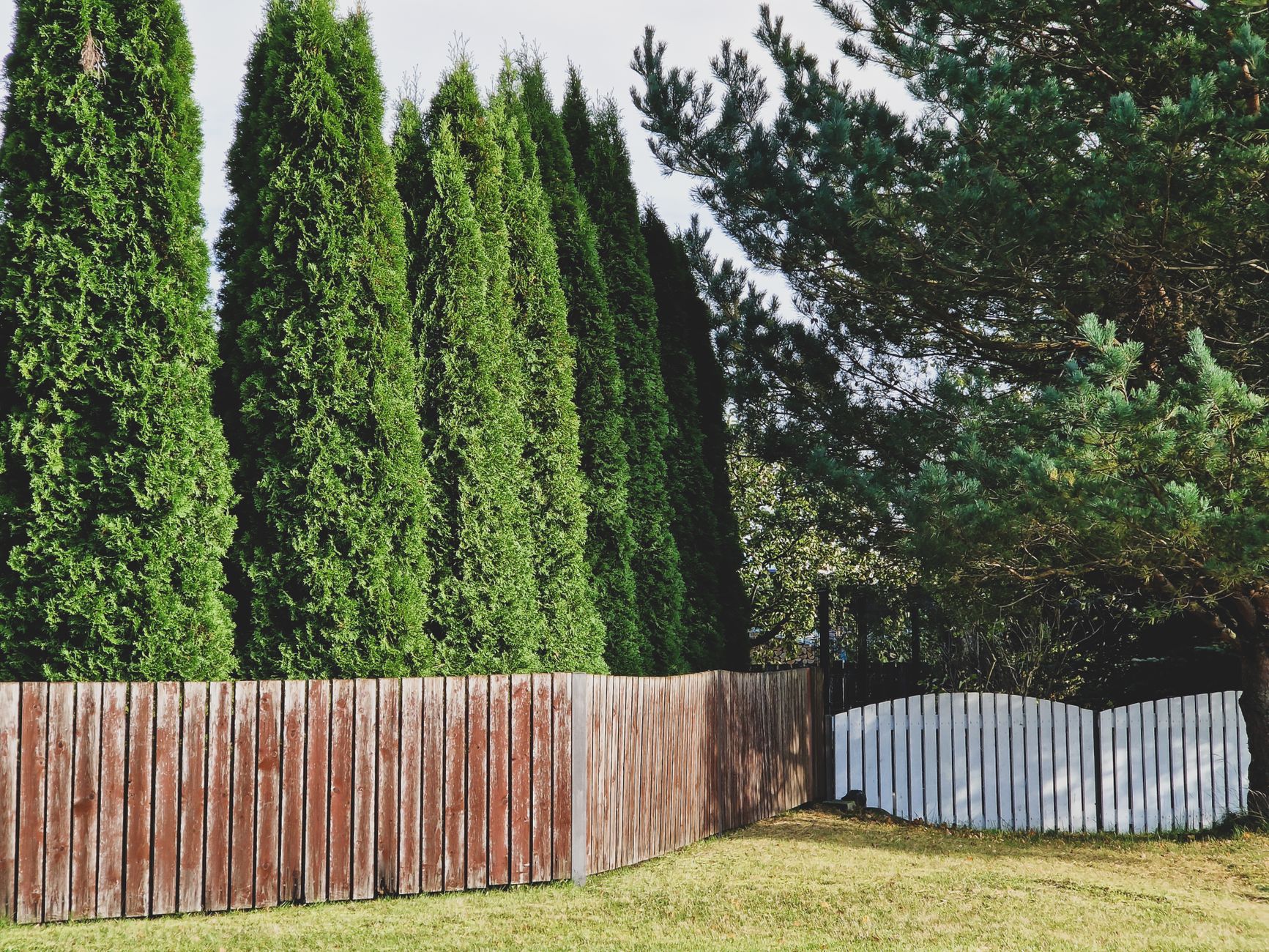
# Privacy Fence Styles Compared: Board-on-Board, Shadowbox, Stockade, and Vinyl
All privacy fences block the view. The differences are in how completely, what they look like from each side, how they handle wind, and how much character they bring. Here are the four styles we install most, compared honestly.
Board-on-Board: Full Privacy, No Gaps Ever
Board-on-board overlaps each picket with its neighbors, so there is no gap and never will be, even as wood naturally shrinks over its first seasons. It reads as the premium wood style, looks finished from both sides, and is the answer when the whole point of the project is that nobody sees in, period.
It uses more lumber than any other style, which makes it the most substantial wood option, and it takes trim details beautifully. A board-on-board fence with a top cap and trim boards is the kind of custom woodwork that makes a backyard feel built rather than bought, and it is a specialty of ours.
Shadowbox: Good Privacy, Great Neighbor Politics
Shadowbox alternates pickets on opposite sides of the rails, so the fence looks identical from both faces. Straight on, it is private; at an angle, thin sight lines open between pickets. The alternating gaps also let breeze through, which matters in a Florida backyard in August.
Its diplomatic superpower: there is no “bad side,” so nobody argues about who gets the finished face. On shared property lines in neighborly places like Switzerland and Green Cove Springs, shadowbox settles the question before it is asked.
Stockade: The Straightforward Classic
Stockade butts pickets edge to edge on one side of the rails. It is the traditional backyard privacy fence: effective, economical with lumber, and quick to build. Two honest caveats: wood shrinkage opens hairline gaps between butted pickets over time, and the rail side faces one direction, so somebody sees structure rather than pickets. Where standards require the finished side out, the rails face you.
Vinyl Privacy: The Zero-Maintenance Wall
Vinyl privacy panels are tongue-and-groove, so the face is seamless, gap-free, and identical on both sides. No staining, no sealing, no shrinkage, and mildew rinses off with a hose. It trades wood’s character for uniformity, which is either the drawback or the entire point depending on your taste. If you love the look of a clean white or tan wall and never want a maintenance weekend, vinyl ends the conversation.
Because solid vinyl panels catch wind, post setting is where a vinyl fence earns its storm rating. That is an installer question more than a material one.
Custom Touches Worth Considering
Any of the wood styles takes upgrades that change the whole presence of the fence: top caps and trim, lattice or spindle top sections that add height with airflow, decorative post caps, and arched gates. Custom trim work is a differentiator we are proud of, and it is usually a modest addition to a project already in motion. If you want a fence that looks designed, say so at the estimate; it costs nothing to see the option priced.
Frequently Asked Questions
Which privacy fence style is most private?
Board-on-board and tongue-and-groove vinyl are the two zero-gap styles for the life of the fence. Stockade starts fully private and develops hairline gaps as wood dries; shadowbox is private straight-on with angled sight lines.
Which style handles wind best?
Shadowbox breathes through its alternating gaps, which lowers wind load. The solid styles handle Florida weather well when posts are set correctly, which is the real variable.
What is the best privacy fence height?
Six feet is the standard and what most zoning and HOA rules readily accommodate. Taller runs into approval requirements quickly, so ask before you fall in love with 8 feet.
See the Styles Priced for Your Yard
The right style depends on your line of sight, your neighbors, your HOA, and your taste. Our privacy fence team will walk your yard, show you examples of each style, and price the options side by side. Veteran-owned, free on-site estimates.