


Fence Installation in Arlington, Jacksonville, FL
Jax AA Fencing installs fences in the Arlington area of Jacksonville, where a lot of the housing dates to the postwar decades and the job is not always a first fence. It can be the second or the third one on the same line. Many of these yards were fenced years ago, and where that material has been in the ground long enough to lean, sag or rot through at the base, replacement is the job. We are veteran-owned, we install wood, vinyl, aluminum and premium composite, and the same crews handle our fence replacement work.
In Arlington the Job Can Start With Taking Something Out
Much of Arlington was built out in the postwar years, and the housing reflects it. Mid-century ranches on modest lots, blocks platted at different times and to different patterns, and yards where the fence line has stayed in the same place through several owners. That means replacement comes up a lot on lots like these, and replacement is a different job.
A fence does not fail evenly. It can fail at one point while the rest of it holds long enough that people put off the decision. Where a wood post has rotted at the ground line, the stretch that stays wet and starved of air, the pickets above can look fine while the post below has lost most of its section. A run of old wood fence can feel solid right up until a post gives way at the dirt.
Old chain link is different. The fabric can outlast everything else. What goes is the terminal posts leaning out under years of tension, the bottom tension wire rusting through and letting the fabric roll up, and the top rail sagging between posts that are no longer plumb. The fence may still be standing. It has just stopped being a boundary.
What Comes Out of the Ground, and What the Ground Has Done Since
Three things can shape how an Arlington replacement goes.
What is under the old posts. Nobody knows until they come out. Some posts come out of bare dirt with nothing holding them but backfill. Some come out with a concrete footing shaped like the bucket it was mixed in. Some were set in collars poured level with the surface, which turned the collar into a bowl that held water against the post and did more damage than no concrete at all. And on some lots there is more than one generation of fence in the same trench, with the old footings left in place. That is the buried surprise that can change a day of work, so it is worth raising at the estimate rather than at the invoice.
Whether the old holes can be reused. In most cases, no, and it is worth being blunt about it. An old post hole is disturbed ground with old concrete, rotted wood and loose fill in it, and it will not hold a new post to the same standard as undisturbed soil around a fresh hole. Old spacing rarely matches the panel or section spacing a new fence needs either. The sound approach is new holes, offset slightly from the old ones, with the old footings removed rather than built around.
What the grade has done since. A fence line that was flush to the ground when it went in decades ago is not necessarily flush now. Soil creeps downhill, beds and mulch get built up against the fence year after year, and driveways, slabs and additions get poured next to it. On some older lots the same fence is buried at one end and has a gap you could roll a ball under at the other. Buried is worse than gapped, because the section sitting in soil is the section most likely to have rotted. The new line has to be set to the ground as it is today, not as it was when the last fence went up.
Choosing the Replacement So You Are Not Doing This Again
Wood is what many older Arlington fences were built from, and it is still a reasonable choice if it is built to survive the ground line. That means treated posts, proper depth, footings that shed water instead of holding it, and a deliberate gap at the bottom so the boards are not sitting in soil. A wood fence that failed at the post did not necessarily fail because of the wood. How the post met the dirt matters as much as the material.
Vinyl takes the ground-line problem largely off the table and stops the repaint cycle. It also holds a clean straight line where old wood had started to wave.
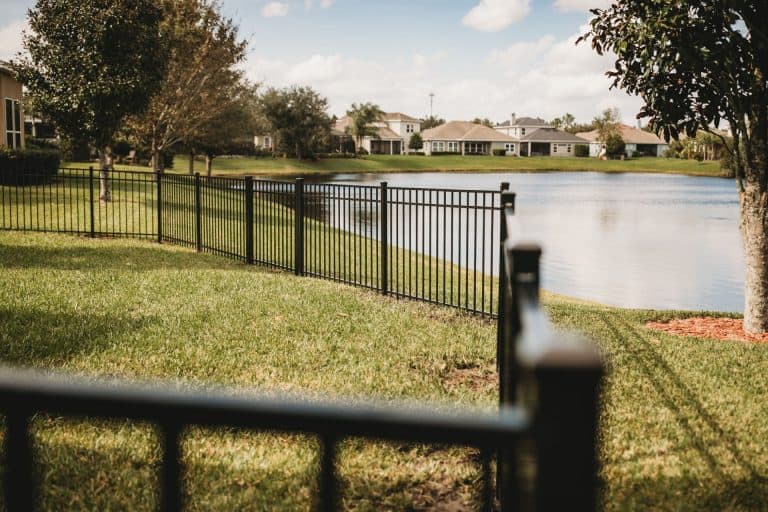
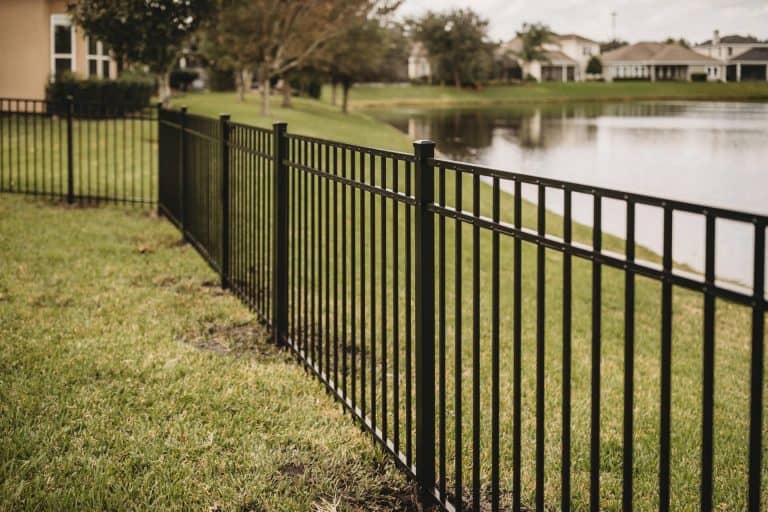
Aluminum is the direct upgrade from tired chain link. It encloses a yard without blocking sight or air, it racks to follow a slope instead of stepping, and it does not rust the way chain link hardware can at the bottom rail and tension wire.
Premium composite on an aluminum frame is for owners who have replaced a fence once and do not intend to do it a third time. The frame does not rot at grade, which is the failure point an old wood fence is most exposed to.
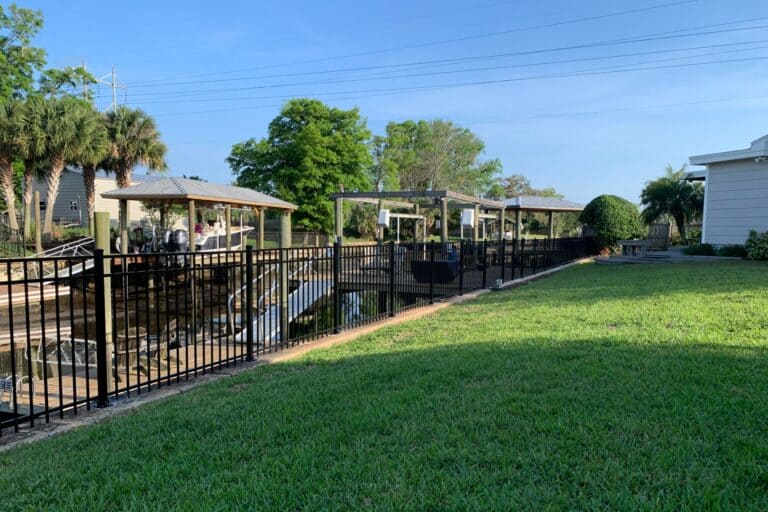

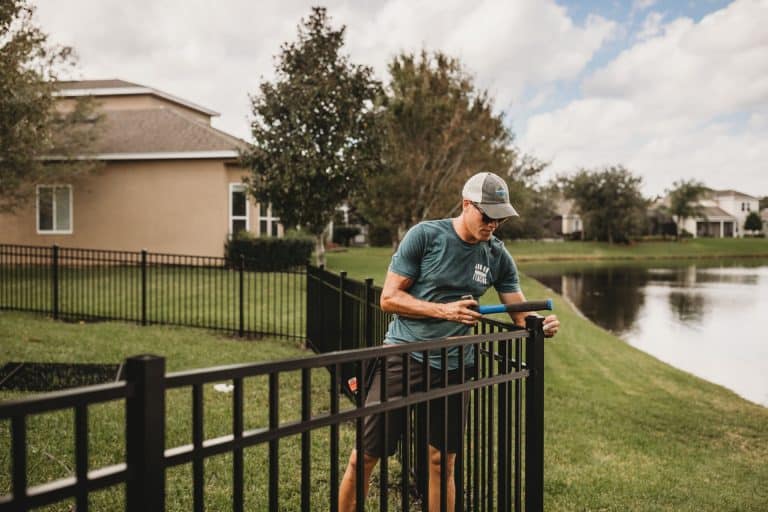
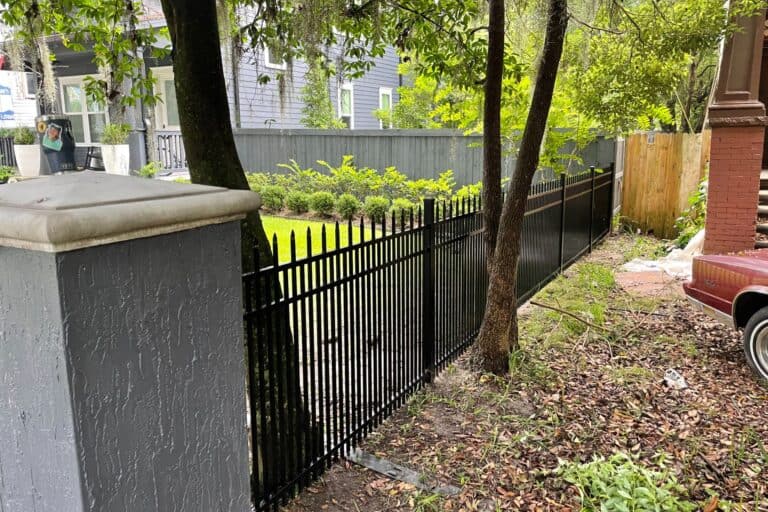
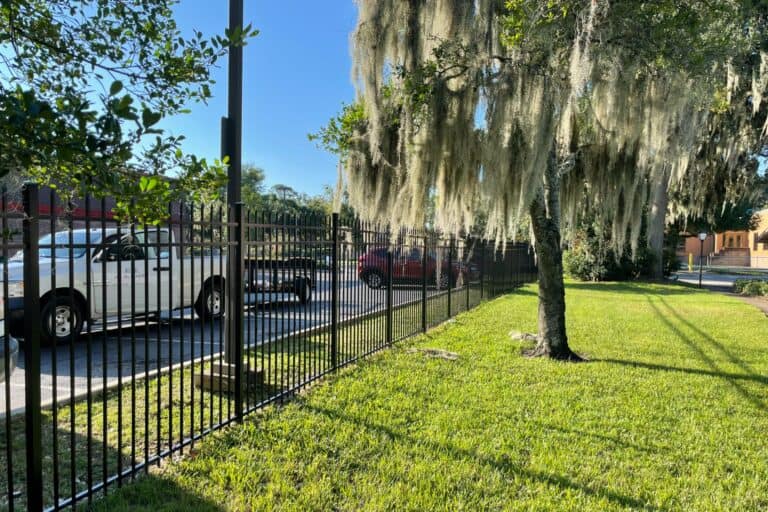




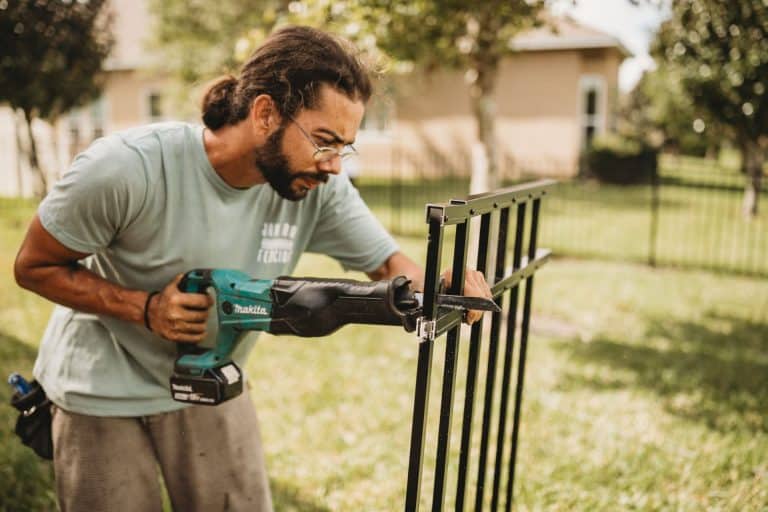
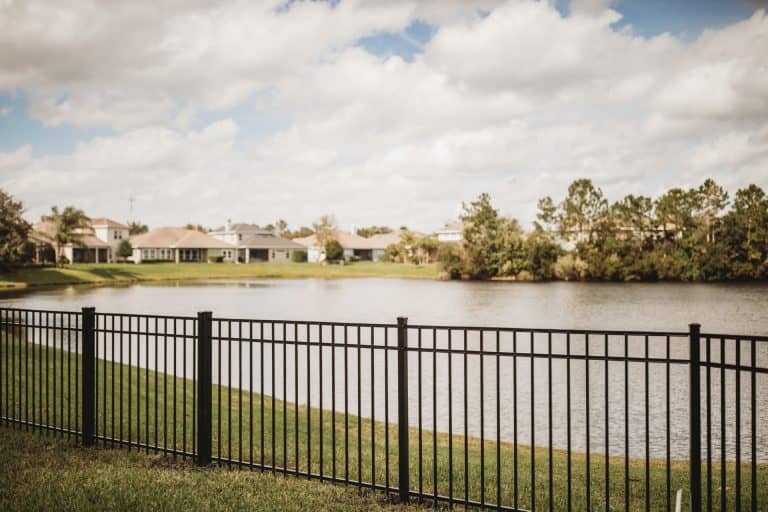
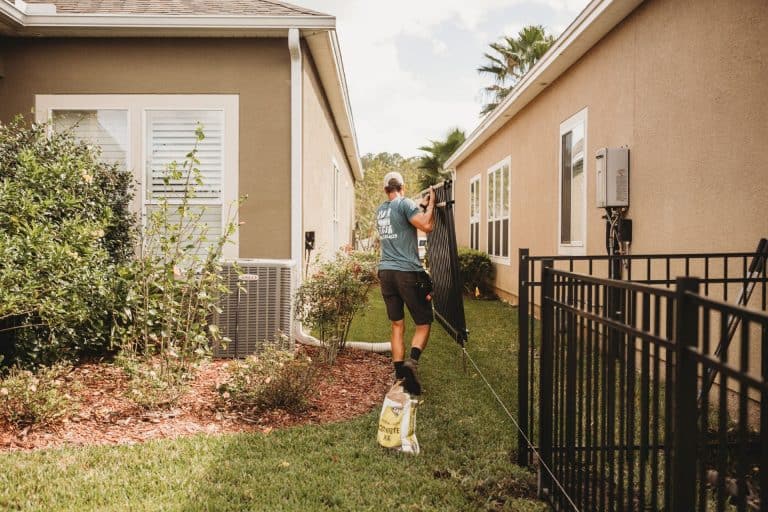
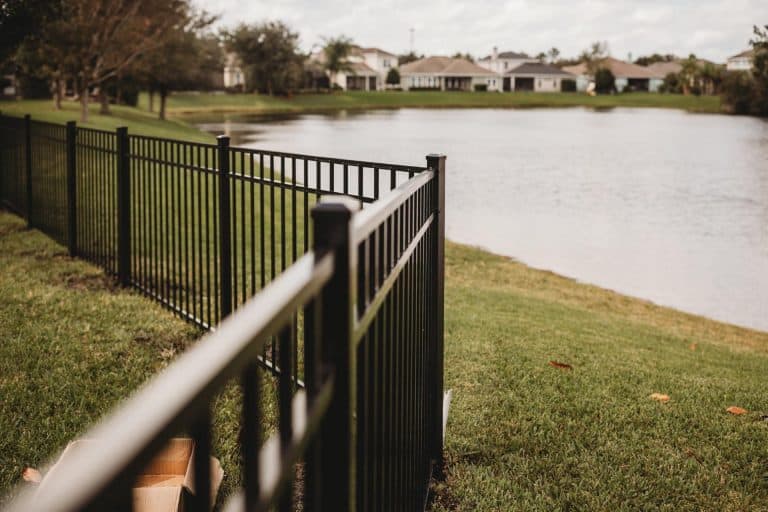
Older Yards Off Merrill, University and Fort Caroline
Residential
Common residential projects in Arlington may include tearing out a failing fence and rebuilding the line properly. Old wood that has gone at the posts, chain link that has leaned away from its corners, and lines that may never have been quite on the property boundary to begin with. We also do new installs on lots that were never fenced, and gate work where the original opening is now too narrow for what people need to move through it.
Commercial
Along the Arlington Expressway, Atlantic Boulevard and the commercial frontage on University Boulevard we can handle property line fencing, dumpster enclosures, equipment screening and access gates, including enclosures that have been hit, bent or rusted past repair.
Look at the Old Fence Before Pricing the New One
The estimate walk. On a replacement the old fence is the best information available, so we walk it with you and read it. Where it failed first, which way it leans, where the ground has risen against it, whether the line looks like it drifted off the boundary, and whether the posts were set in concrete, in dirt, or in something between. That tells us what removal will involve.
Permits and approvals. Arlington is inside the City of Jacksonville, so fence permitting runs through the city’s Planning and Development Department, and requirements depend on height and placement. Replacing an existing fence does not automatically mean the old configuration is still the right one, so it is worth confirming rather than assuming, and we handle that side of it. Where a community has an HOA, that approval is a separate track worth starting early.
Locates before digging. 811 gets called on every job. On an older lot, service runs put in decades ago are not always where anyone expects, and a replacement means a full line of new holes.
Removal and install. Old fence out, old footings out, holes set fresh in undisturbed ground, line set to the grade as it exists now, gates hung and adjusted, old material hauled away. You get a walkthrough before we leave, not a text from the road.
Arlington Fence Questions, Answered Before Replacing an Old Fence
In most cases, no, and you would not want to. An old hole is full of disturbed fill, broken concrete and rotted wood, and a new post set in it will not grip the way one in undisturbed ground does. Old spacing rarely matches what a new fence needs either. The better approach is to pull the old footings, dig fresh holes, and offset them slightly so the new posts sit in solid ground.
A wood post can rot at the soil line, where it stays damp and gets no air, while everything above still looks sound. The pickets are not what holds the fence up. If the post has lost most of its strength below grade, the lean is the first visible sign, which is why a leaning fence is worth looking at before the next storm rather than after it.
Sometimes a section is genuinely all that is wrong, such as where a tree came down or a vehicle backed into it. But where the rest of the posts are the same age and were set the same way, the section that failed may simply be the first to go. We will tell you which one you have. Patching a line whose posts are all at end of life can buy a season and cost you the removal twice.
Haul-away is part of the replacement job. Old panels, posts, footings, rusted chain link and gate hardware all leave with us, and the line is cleared before anything new is set. It is not an extra conversation at the end.
A lot. Over the life of an old fence the soil can move, beds get built up against it, and slabs and driveways get poured beside it. On an older lot the same fence can end up half buried at one end and gapped at the other. Buried is the part that rots. The new line gets set to the grade as it is today, stepped or racked to match how the ground actually falls, with the material kept up out of the soil.
Not always. On older blocks a fence may have been set for convenience rather than to a survey, and each replacement inherited the last one's position. If the existing line looks off, we say so before rebuilding on it. Rebuilding in the wrong place is expensive to undo and easy to sort out beforehand.
Yes, and it is a common upgrade on older lots. Worth knowing is that a solid privacy fence catches wind and holds water in a way chain link never did, so the posts have to be set for that load rather than matched to the old spacing. The new line gets sized and spaced for the fence you are actually getting.
What Jacksonville Homeowners Say After the Old Fence Is Gone
Posted on Google
 Shirley Abril
Trustindex verifies that the original source of the review is Google.
I highly recommend Jax AA Fencing! Dylan was amazing to work with. He was professional, knowledgeable, and took the time to clearly explain everything throughout the process. The quality of the work was excellent, and the entire experience was smooth from start to finish. Thank you, Dylan, for the outstanding service!Posted on Google Michelle YoungEveryone was so nice and helpful from start to finish. i had a vinyl fence put in and it looks great. Grace was wonderful and helpful with the HOA and the documentation needed, it was so easy. It was installed sooner than I thought and Brandon took great care making sure it looked good.Posted on Google
 Suzanne HerndonOur new fence is amazing! Dylan came and measured for an aluminum fence along the lake line and a white fence in the front that connected with our neighbors. The fencing was erected in one day. Dylan showed great attention to detail and made sure all of the slats were symmetrical. He was prompt, professional and very nice. When he was done he had me walk the perimeter to show me his work and to make sure I was satisfied. I would enthusiastically recommend Jax AA Fencing to anyone in need of a quality fence!Posted on Google
 George RoyalJax AA Fencing did an amazing job removing my old fence and installing a new one! The installation team was prompt, very polite, and professional. I highly recommend Jax AA Fencing if you want a great looking fence, done right, and at a reasonable price.Posted on Google
 Arthur SchlofmanExcellent job donePosted on Google
 Stacey CampbellGreat company to work with from quoting to installation. The staff very helpful. Would definitely recommend them to anyone.Posted on Google
 AJThank you to the whole team at Jax AA. You guys are awesome, and your work ethic is outstanding. The whole process was so easy, and the customer service was amazing. I’m a returning customer, and that says a lot about this company. Great communication, very punctual, prompt and professional.Posted on Google
 Samuel DrumI wanted to get my fence extended to have access to the side faucet of the house. The estimate was reasonably priced and every step along the way was very professional, and they kept in touch while waiting for the HOA approval. When my HOA finally approved the project we got everything scheduled in a timely manner. On the day of install it was super quick and done before I knew it. I highly recommend them for service and any future fencing needs.Posted on Google
 Sean CaseyExcellent experience with Jax AA Fencing! Mark and Brandon were professional, friendly, and kept us informed throughout the entire project. The fence was installed quickly, looks great, and the workmanship is top-notch. Highly recommend Jax AA Fencing to anyone looking for quality fencing and outstanding customer service!Posted on Google
 Matthew McMainFantastic people to work with. Very professional and timely. They listen to your wants and deliver.
Have the Old Fence Read Before You Replace It
An Arlington replacement is decided by things you cannot see from the house. What the posts were set in, what the ground has done since, and whether the line is where it should be. We will walk it with you, tell you what we expect to find, and put it in writing. Free on-site estimate, no pressure, veteran-owned and local. Call (904) 330-4829.
Closer to Mayport or San Marco? The Mayport and San Marco pages cover those streets. Look through finished projects in our gallery, see every area we cover on the service areas page, or start with the Duval County overview.