


Fence Installation in Springfield, Jacksonville, FL
Jax AA Fencing installs fences throughout the Springfield area of Jacksonville, where a front fence is part of how the house reads from the street, not just a line around a yard. Properties inside Jacksonville’s locally designated Springfield Historic District require a Certificate of Appropriateness for fence work, regardless of whether the fence is visible from the street. The design and level of review may vary depending on the fence’s location, material, height and other project details. That review is separate from any required building permit. Not every address in the wider Springfield area sits inside the district boundary, so confirm your property’s status by address with the City of Jacksonville before you plan the line. We are veteran-owned, we install wood, vinyl, aluminum and premium composite, and the same crews handle our fence replacement work.
In Springfield, Check the District Boundary Before the Post Hole
Springfield was platted on a grid, and on many blocks the houses sit close to the sidewalk with shallow front yards, so a front fence is read from the street as soon as it goes up. Properties inside Jacksonville’s locally designated Springfield Historic District require a Certificate of Appropriateness for fence work, regardless of whether the fence is visible from the street. The design and level of review may vary depending on the fence’s location, material, height and other project details. The district review looks at what the fence is made of, how tall it is, where it sits on the lot and how it reads against the house behind it.
Two things are worth being clear about. First, the Certificate of Appropriateness is a separate track from any required City of Jacksonville building permit, and getting one does not get you the other. Second, it can affect your start date, so if it applies to your property it is the step to begin first rather than last. We will not tell you what the review will decide, because that is not ours to promise. We can help you review what the application asks for, and settling the material and placement decisions early keeps the paperwork from being the thing holding your job up.
The Street Side, the Rear Access, and the Line You Think You Own
Three things are worth settling early on a Springfield property.
The street-facing run. This is where the design conversation happens. Both rear and street-facing fences inside the locally designated Springfield Historic District require a Certificate of Appropriateness. Street-facing runs may raise additional design considerations because their material, height and placement affect the property’s appearance from the street. Where a run turns the corner and faces the sidewalk, material, height and how the fence sits against the front of the house all matter, and they may matter to somebody other than you. Plan the street side first and the rest of the line falls into place around it.
Rear access. Some Springfield blocks have a rear alley, and where one exists it is both an opportunity and a constraint. It can be the way material reaches the back of a lot without coming through your side yard, and it is also where a rear gate wants to be sized for whatever you actually park or store. Some alleys are clear and some are not, and that is worth finding out on the walk rather than on the morning of the install.
The line you think you own. On older platted lots, an existing fence is not always reliable proof of the legal boundary. Replacing a fence in the same trench carries that assumption forward. If there is any doubt about where the boundary sits, the survey is worth checking before posts are set rather than moving a finished run later.
What Suits a Street-Facing Line and What Belongs Behind the House
Wood is the traditional choice on older streets like Springfield’s and the one that gives you the most room to match the house. It can be built as an open picket for a front yard or solid for privacy in back, the detail at the top and the post caps can be adjusted, and it takes paint, which matters when the fence sits a few feet from a painted frame house. It also needs upkeep, and we would rather say that plainly than sell you something maintenance-free that does not suit the setting.
Vinyl ends the painting and holds a clean line, and it is usually the lower-maintenance option for a back yard run that is not read from the street. On a street-facing line inside the designated district it may be a harder case to make, and it is a question to raise in the application rather than after the panels are up.
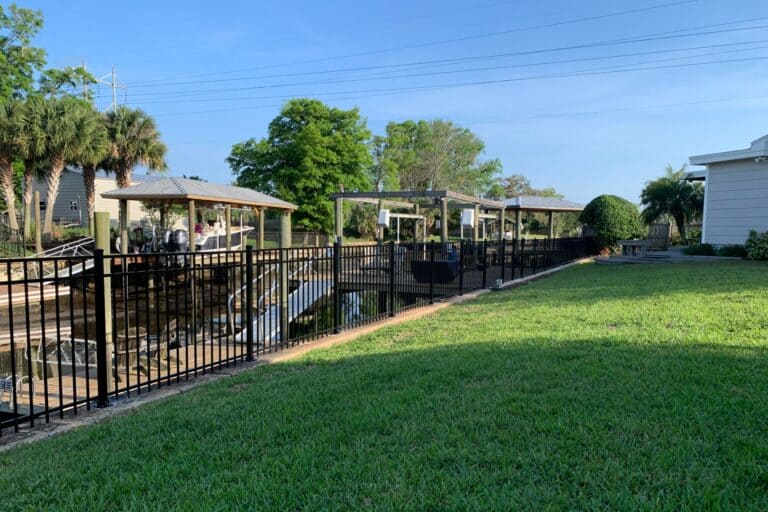
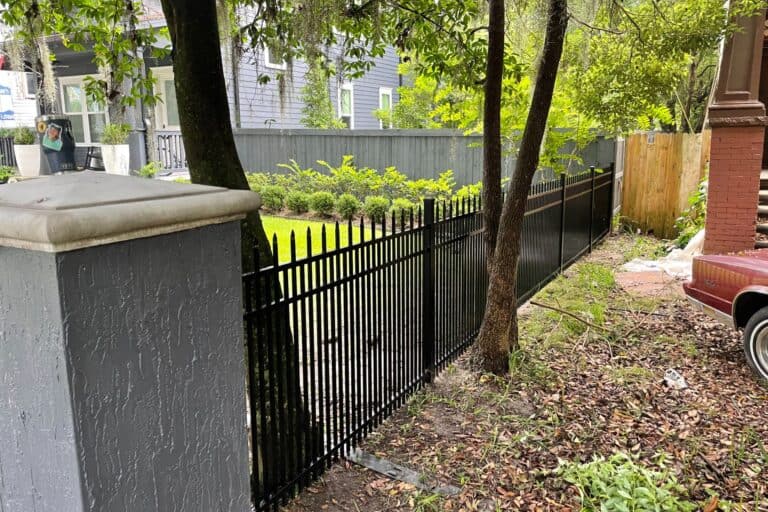
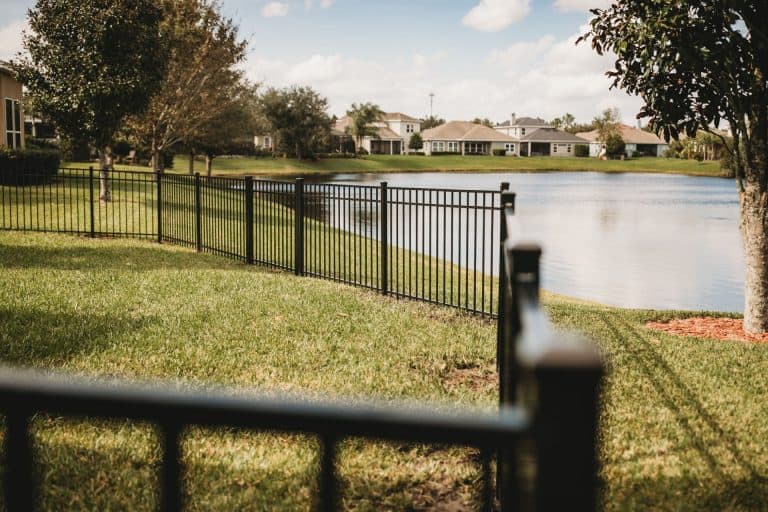
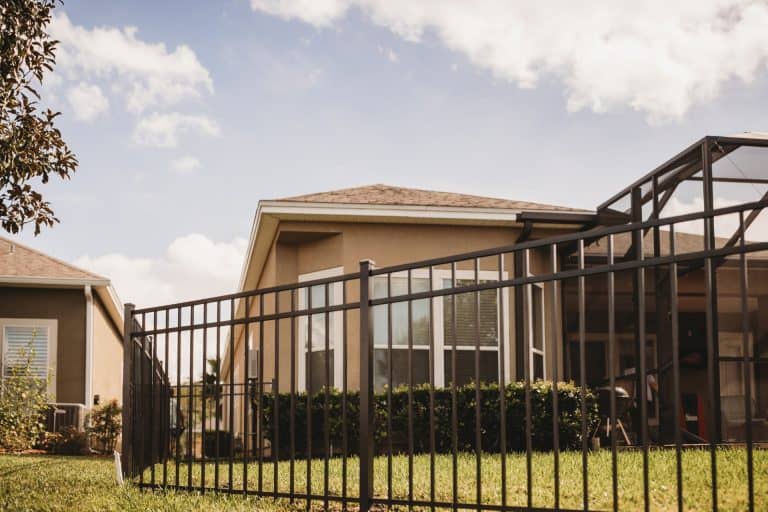
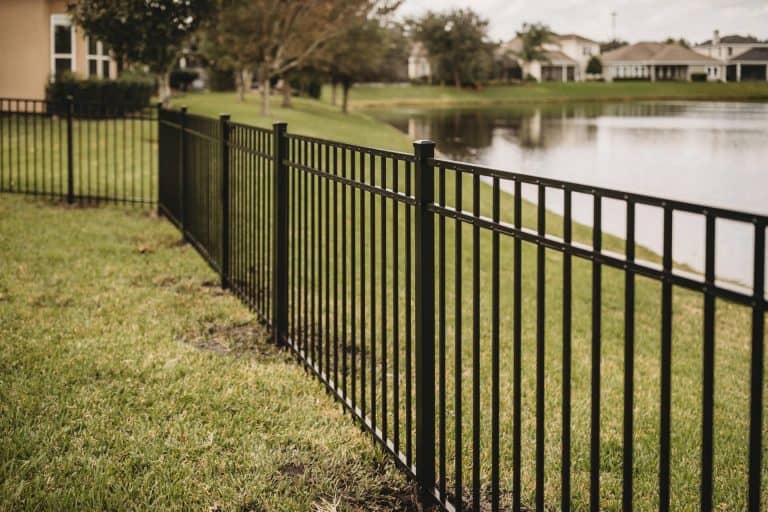
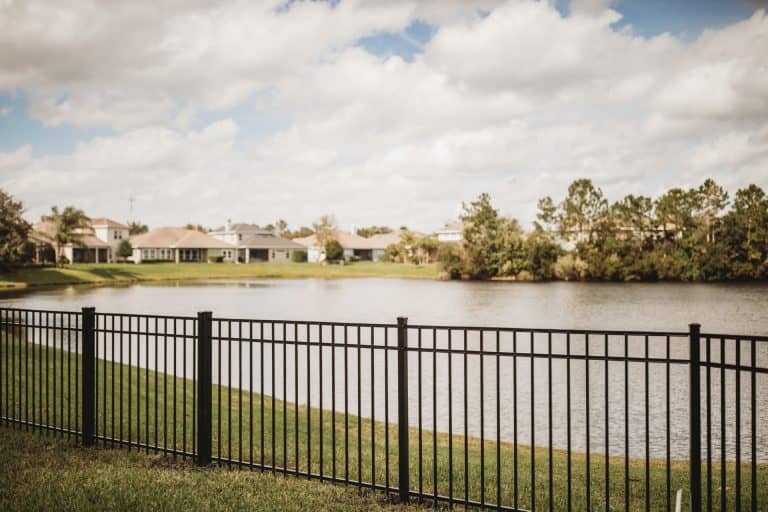
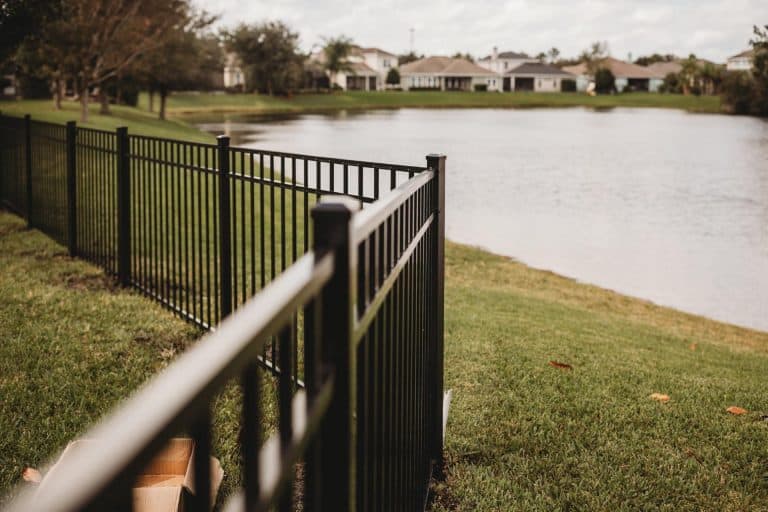
Aluminum reads closest to traditional ornamental metal fencing, which is why it is a common choice for a front boundary that does not close the yard off visually. It handles damp conditions better than anything you have to paint.
Premium composite on an aluminum frame is a full privacy option with no repainting cycle. It generally suits a back yard run in a setting like this, and it fits owners who want the rear line handled once and not revisited.





Frame Houses, Corner Lots, and Businesses Along Main Street
Residential
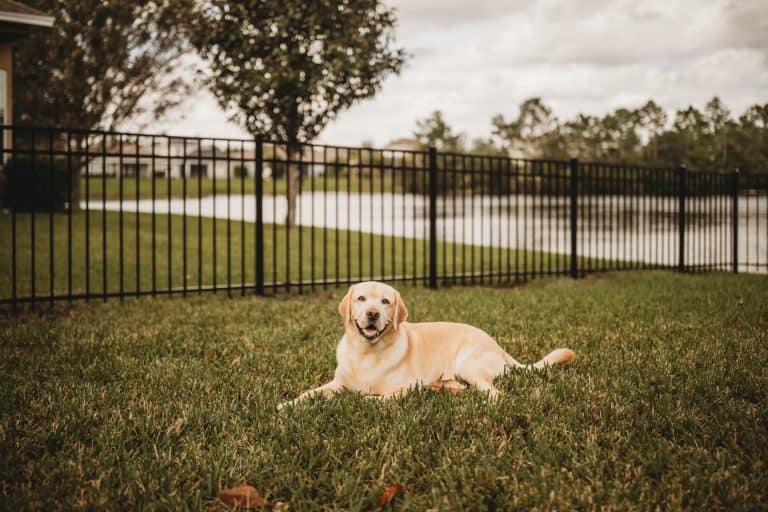
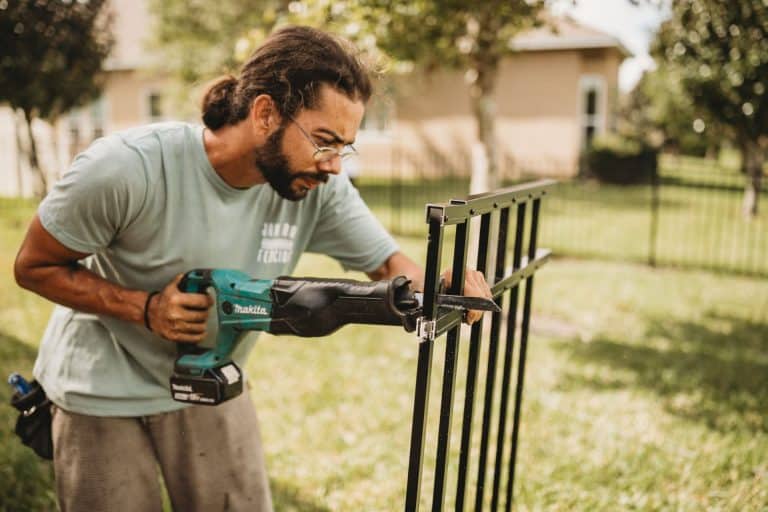
Common residential projects in Springfield may include a back yard fence for dogs, kids or a pool, a front or side boundary on an older frame house that may need to satisfy the district review, and replacement of runs that went in years ago and have failed at the ground line. Corner lots take extra planning, because two sides of the yard face a street instead of one.
Commercial
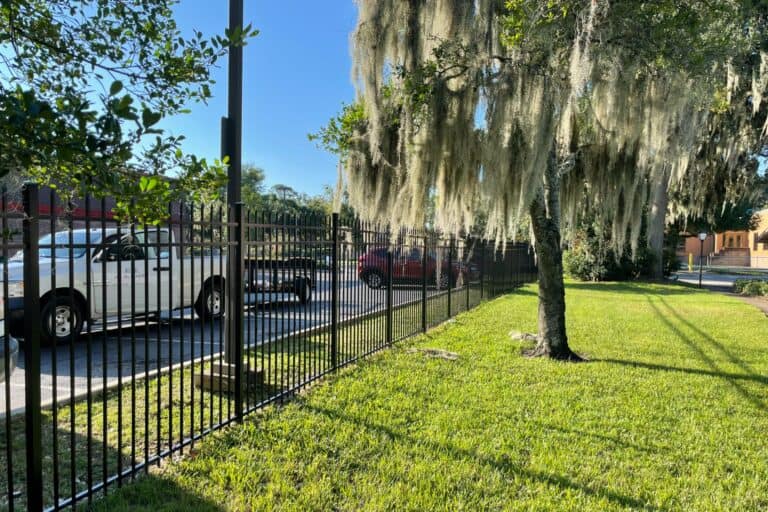
Along Main Street and the surrounding blocks we can install property line fencing, dumpster and equipment enclosures, and access gates for small commercial properties that need the boundary secure without looking like it was bolted on. Where a commercial property sits inside the locally designated district, a Certificate of Appropriateness is required for fence work there too, so we plan those jobs the same way.
Start the Paperwork Before You Start the Digging
The estimate walk. We walk the line with you and split it into the part the street sees and the part it does not. Where gates go, how wide a rear gate needs to be, which trees stay, and where the ground falls away toward the back of the lot.
Permits and approvals. Fence permitting in Springfield runs through the City of Jacksonville Planning and Development Department, and requirements depend on height and placement. On top of that, properties inside Jacksonville’s locally designated Springfield Historic District require a Certificate of Appropriateness for fence work, regardless of whether the fence is visible from the street. It is reviewed separately from any required building permit and it can affect your start date, so confirm your property’s status by address with the City of Jacksonville early. We handle the permitting side, and we can help you review what the district application asks for.
Locates before digging. 811 gets called on every job. Older neighborhoods can carry old utility runs and, where alleys exist, alley services, and one unmarked line is one too many.
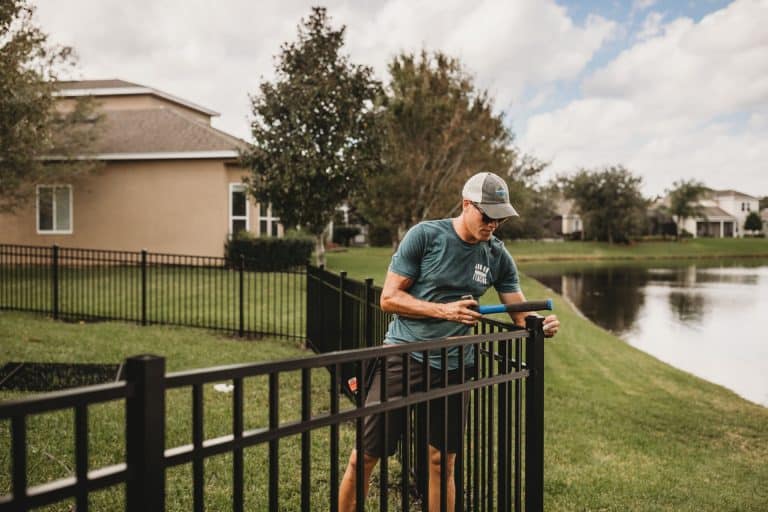
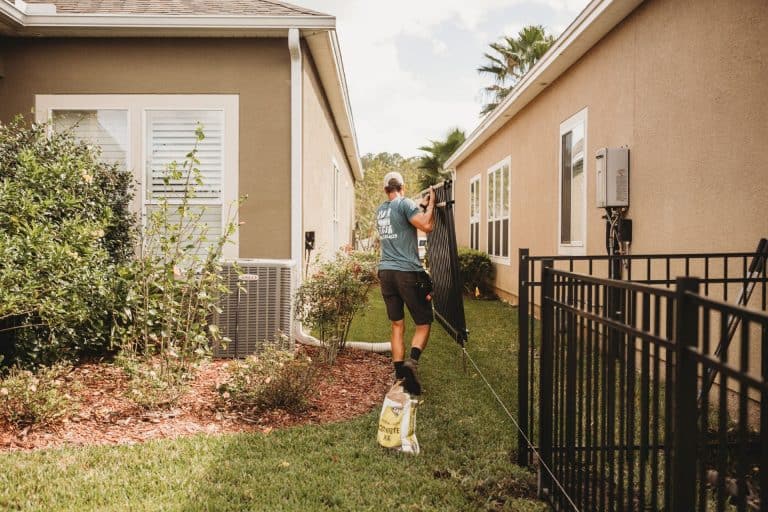
Install. Posts set, line stepped properly where the ground moves, gates hung and adjusted so they still close in August, site cleared, and a final walk of the line with you before we leave.
Springfield Fence Questions, Answered Before the First Post Hole
If your property is inside Jacksonville's locally designated Springfield Historic District, yes. Not every address in the wider Springfield area is inside the district, so confirm the property's status using the city's address search. Inside the district, a Certificate of Appropriateness is required for fence work regardless of whether the fence is visible from the street. The design and level of review may vary depending on the fence's location, material, height and other project details. It is a separate review from any required City of Jacksonville building permit, and one does not replace the other. We handle the permitting side of the job and can help you review what the application asks for, but the outcome of a district review is not ours to promise.
If a Certificate of Appropriateness applies to your property, it is worth starting first rather than last. Review and turnaround times vary and are set by the city, not by us, so a fixed number is not something to rely on. What we can say is that the install itself is usually the short part of a fence project. Design decisions, any district review and the building permit are what set the calendar. Confirm your property's status by address early, and call before you have settled every detail rather than after, so the paperwork can move while the rest is decided.
Wood and ornamental style aluminum are the two that most readily fit the character of an older Springfield street, because they can be detailed to sit correctly against a frame house. Vinyl and composite are strong materials, but on a front or side run that the sidewalk sees inside the designated district they may be a harder case, and the place to raise them is in the application rather than after the panels are standing. Behind the house, where the run is not visible from the street, the material conversation opens up considerably.
Front yard fences are treated differently from back yard fences by the City of Jacksonville's rules on height and placement, and inside the locally designated district all fence work requires a Certificate of Appropriateness, and a street-facing run may raise additional design considerations because its material, height and placement affect how the property reads from the street. In many cases that points toward an open style at the front rather than a solid wall, but the answer depends on your property and its status. We will walk the front of your lot, tell you what we would suggest, and be straight with you if what you are picturing is unlikely to work as described.
Where a lot has one, it can. Some Springfield blocks have rear alleys, and an alley can give a crew a way to bring material to the back of the lot without carrying it through a narrow side yard, and it lets you put a real gate on the rear line. The things to decide on the walk are how wide that gate needs to be for what you park or haul through it, and whether the alley surface and any encroaching growth actually allow access. That gets checked before scheduling, not on the morning of the install.
Rarely a good idea, and we will tell you so. When a fence has failed at the ground line, the posts have generally been sitting in damp soil for a long time, and what looks sound at eye level can be soft where it counts. Setting new panels on tired posts tends to buy a little time before the whole run needs doing anyway. The better approach is to pull the old posts, reset properly, and haul the old material off. If a post genuinely is sound, we will say that too.
By looking at the survey before we dig, not after. On older platted blocks an existing fence may have been set by eye, and if we simply rebuild in the same trench we inherit whatever the last person got wrong. If you have a current survey, we work from it. If you do not and there is any real doubt about the boundary, getting one is the cheaper end of the problem compared with moving a finished fence or having a neighbor dispute it later.
What Jacksonville Homeowners Say After the Crew Leaves
Posted on Google
 Shirley Abril
Trustindex verifies that the original source of the review is Google.
I highly recommend Jax AA Fencing! Dylan was amazing to work with. He was professional, knowledgeable, and took the time to clearly explain everything throughout the process. The quality of the work was excellent, and the entire experience was smooth from start to finish. Thank you, Dylan, for the outstanding service!Posted on Google Michelle YoungEveryone was so nice and helpful from start to finish. i had a vinyl fence put in and it looks great. Grace was wonderful and helpful with the HOA and the documentation needed, it was so easy. It was installed sooner than I thought and Brandon took great care making sure it looked good.Posted on Google
 Suzanne HerndonOur new fence is amazing! Dylan came and measured for an aluminum fence along the lake line and a white fence in the front that connected with our neighbors. The fencing was erected in one day. Dylan showed great attention to detail and made sure all of the slats were symmetrical. He was prompt, professional and very nice. When he was done he had me walk the perimeter to show me his work and to make sure I was satisfied. I would enthusiastically recommend Jax AA Fencing to anyone in need of a quality fence!Posted on Google
 George RoyalJax AA Fencing did an amazing job removing my old fence and installing a new one! The installation team was prompt, very polite, and professional. I highly recommend Jax AA Fencing if you want a great looking fence, done right, and at a reasonable price.Posted on Google
 Arthur SchlofmanExcellent job donePosted on Google
 Stacey CampbellGreat company to work with from quoting to installation. The staff very helpful. Would definitely recommend them to anyone.Posted on Google
 AJThank you to the whole team at Jax AA. You guys are awesome, and your work ethic is outstanding. The whole process was so easy, and the customer service was amazing. I’m a returning customer, and that says a lot about this company. Great communication, very punctual, prompt and professional.Posted on Google
 Samuel DrumI wanted to get my fence extended to have access to the side faucet of the house. The estimate was reasonably priced and every step along the way was very professional, and they kept in touch while waiting for the HOA approval. When my HOA finally approved the project we got everything scheduled in a timely manner. On the day of install it was super quick and done before I knew it. I highly recommend them for service and any future fencing needs.Posted on Google
 Sean CaseyExcellent experience with Jax AA Fencing! Mark and Brandon were professional, friendly, and kept us informed throughout the entire project. The fence was installed quickly, looks great, and the workmanship is top-notch. Highly recommend Jax AA Fencing to anyone looking for quality fencing and outstanding customer service!Posted on Google
 Matthew McMainFantastic people to work with. Very professional and timely. They listen to your wants and deliver.
Get the Line Walked and the Paperwork Started
In Springfield the fence you end up with can be decided as much in the approval as in the yard. We will walk the line with you, tell you plainly what we would suggest, handle the city permitting side, and help you review whether your address sits inside the locally designated district and what the Certificate of Appropriateness application asks for. Free on-site estimate, no pressure, veteran-owned and local.
Closer to Riverside or San Marco? The Riverside and San Marco pages cover those streets. Look through finished projects in our gallery, see every area we cover on the service areas page, or start with the Duval County overview.