If you have a pool in Florida, the short version of the law is this: your pool needs a barrier at least 4 feet high that a young child cannot crawl under, squeeze through, or climb over, with gates that open away from the pool, close themselves, and latch themselves. That comes from Florida’s Residential Swimming Pool Safety Act, and it applies to homes across Jacksonville and Northeast Florida. Here is what the rules actually require, layer by layer.
The quick version:
- Barrier at least 4 feet high, measured on the outside
- No gaps, openings, or footholds a young child could use to get under, through, or over
- Barrier placed far enough from the water’s edge that a child who gets past it does not fall straight in
- Nothing climbable (pool equipment, furniture, structures) positioned against it
- Gates open outward away from the pool, self-close, and self-latch
- Gate release on the pool side, out of a child’s reach over the top or through gaps
The Four Layers of Pool Fence Rules
Pool barriers in Florida are governed by more than one set of rules, and they stack. Meeting one layer does not excuse you from another.
State law. The Residential Swimming Pool Safety Act (Chapter 515, Florida Statutes) is the foundation. It requires every new residential pool to have at least one approved drowning-prevention safety feature, and a compliant barrier is the option most homeowners choose.
The Florida Building Code. New pool construction is permitted under the Florida Building Code, Residential (currently the 8th Edition, 2023), whose barrier sections run parallel to the statute’s requirements. Your pool contractor’s permit is checked against the code edition in effect at the time, so barrier specs get verified at final inspection.
Local rules. Jacksonville and the surrounding counties enforce the state standards through their building departments, and local zoning can add its own fence height and placement rules on top.
Your HOA. Communities around Nocatee, Fleming Island, and similar neighborhoods often have their own standards for fence material, color, and style. HOA approval is separate from code compliance, and you need both.
What the State Barrier Rules Require
The statute is specific about what makes a barrier compliant:
Height. At least 4 feet high, measured on the outside of the barrier. Taller is fine and common.
No child-sized weaknesses. The barrier cannot have gaps, openings, indentations, or structural components that would let a young child crawl under it, squeeze through it, or climb over it. Horizontal rails positioned like ladder rungs are the classic mistake here.
Placement. The barrier must stand far enough from the water’s edge that a child who somehow gets past it does not immediately fall into the pool. It also cannot be positioned where a permanent structure or equipment, like a pool pump or an AC unit, gives a child something to climb.
Gates. Every gate providing access to the pool must open outward away from the water, close itself, and latch itself. The release mechanism sits on the pool side of the gate, placed so a young child cannot reach it over the top or through any opening.
Why Aluminum Is the Standard Choice for Pool Fencing
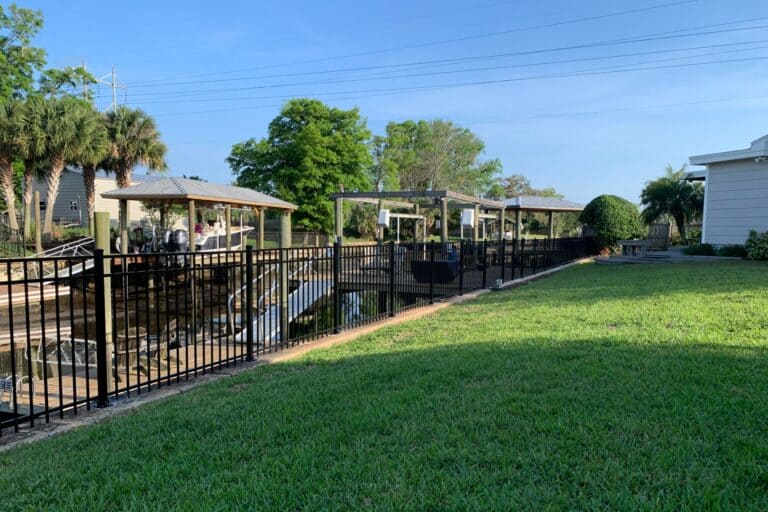
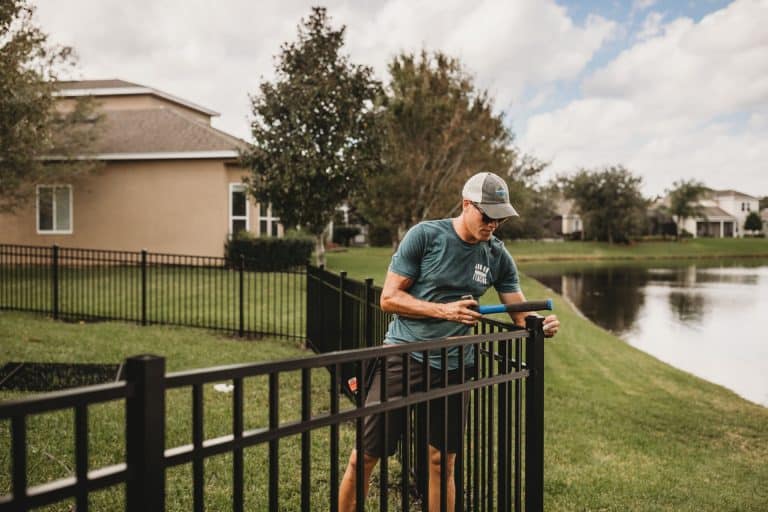
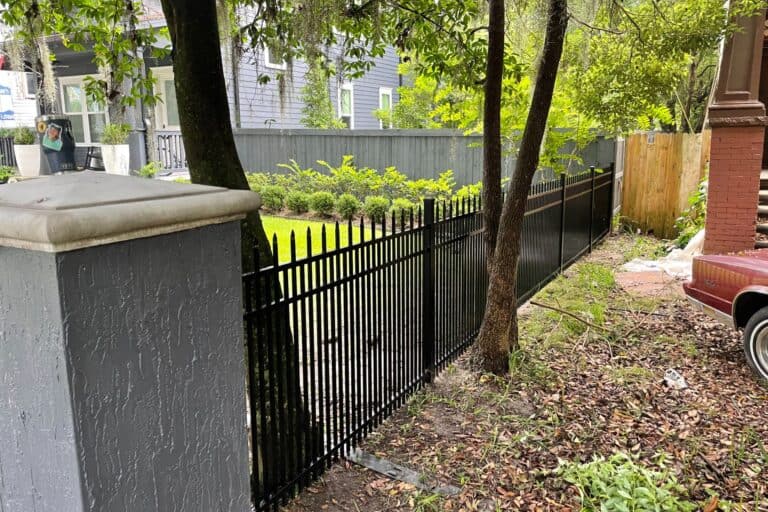
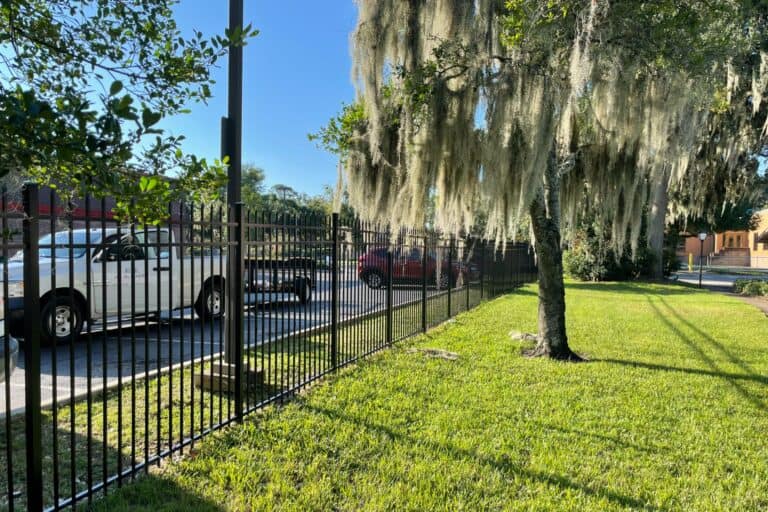
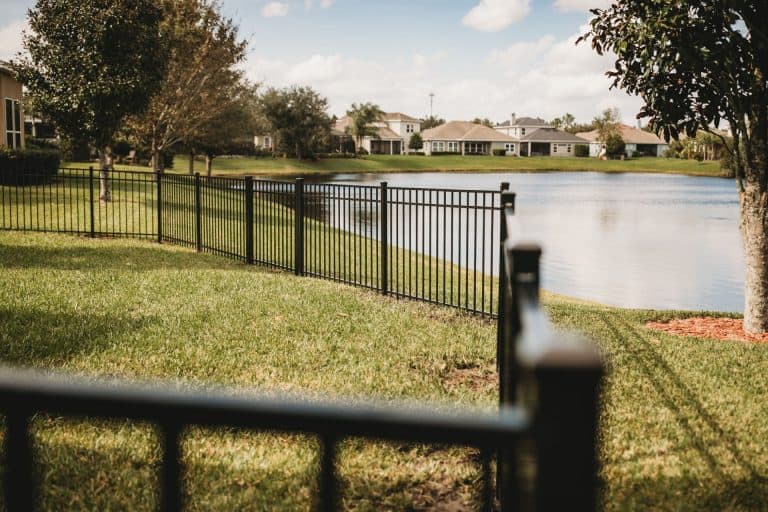
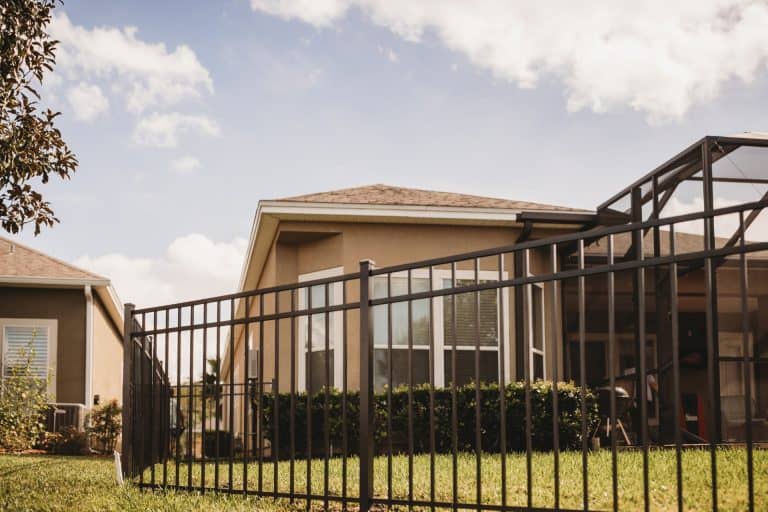
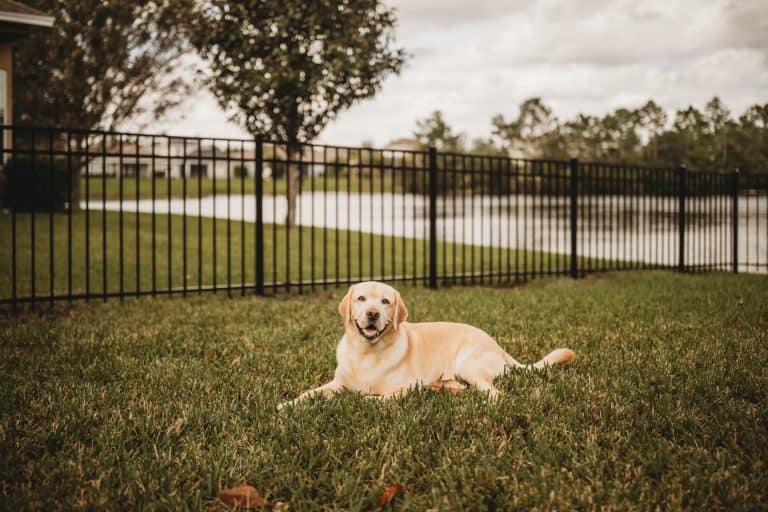
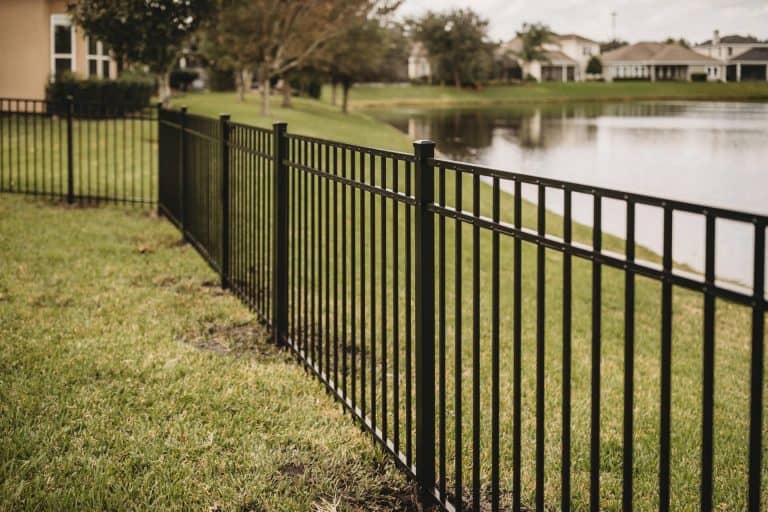
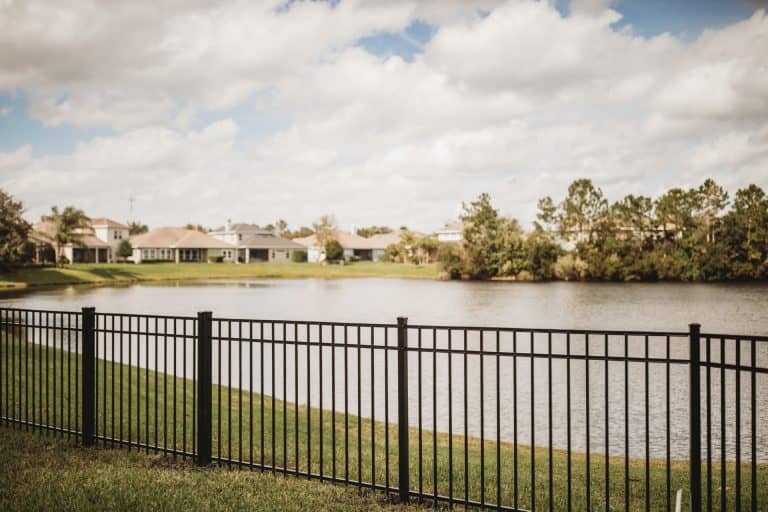
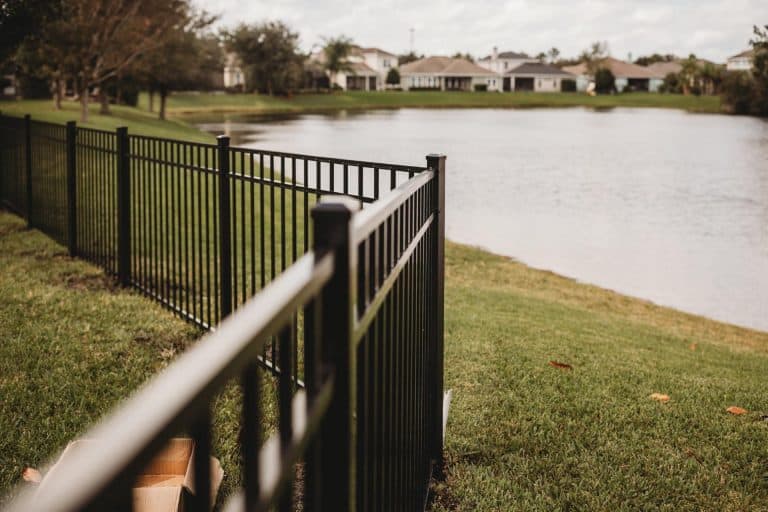
There is a reason most pool barriers you see in Northeast Florida are aluminum picket fences. The vertical picket design has no horizontal footholds in the climbable zone, picket spacing is manufactured tight enough to meet the squeeze-through rules, and aluminum shrugs off pool chemicals, sprinklers, and humidity without rusting or rotting. Self-closing hinges and magnetic pool latches are standard hardware on aluminum gate installations, which takes care of the gate requirements in one pass.
Wood and vinyl privacy fences can also serve as pool barriers when the yard enclosure itself forms the barrier, as long as every gate in that enclosure meets the same self-closing, self-latching standard. Where homeowners get caught is a compliant fence with a non-compliant gate. The gate is what inspectors check first.
Frequently Asked Questions
How tall does a pool fence have to be in Florida?
At least 4 feet, measured from the outside. Many homeowners go taller for privacy or to match an existing fence line, which is fine. The 4-foot number is a floor, not a target.
Do the rules apply to older pools?
The statute’s safety-feature requirement was written around new residential pools at the time of completion. But insurance carriers, home sales, and basic liability make a compliant barrier the practical standard for any pool, whatever its age. If your current fence would not pass today’s rules, that is worth fixing before it becomes a problem in an inspection or a claim.
Can my regular backyard fence count as the pool barrier?
Yes, if the enclosure meets the barrier standards: 4 feet minimum, nothing a child can crawl under or climb, and every gate self-closing, self-latching, and opening away from the pool. A standard gate latch at handle height does not qualify.
Does a screen enclosure count?
The statute defines a barrier as a fence, dwelling wall, or nondwelling wall, so a screen enclosure is not automatically a barrier by that definition. In practice, local building departments commonly accept a screened pool cage that fully encloses the pool with self-closing, self-latching doors. Confirm with your local building department before relying on a cage as your only layer.
This article is general information, not legal advice. Barrier requirements are enforced through your local building department, and specifics can change with code updates. Verify current requirements with your municipality or a licensed contractor before building.
Get a Pool Fence That Passes Inspection
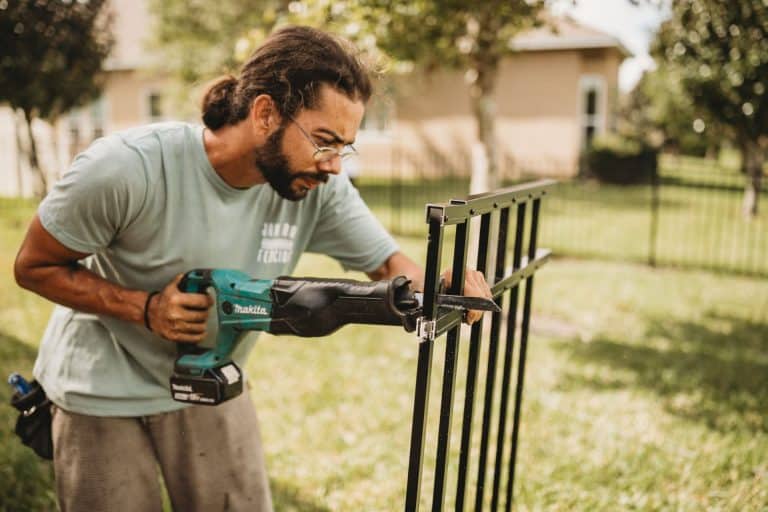
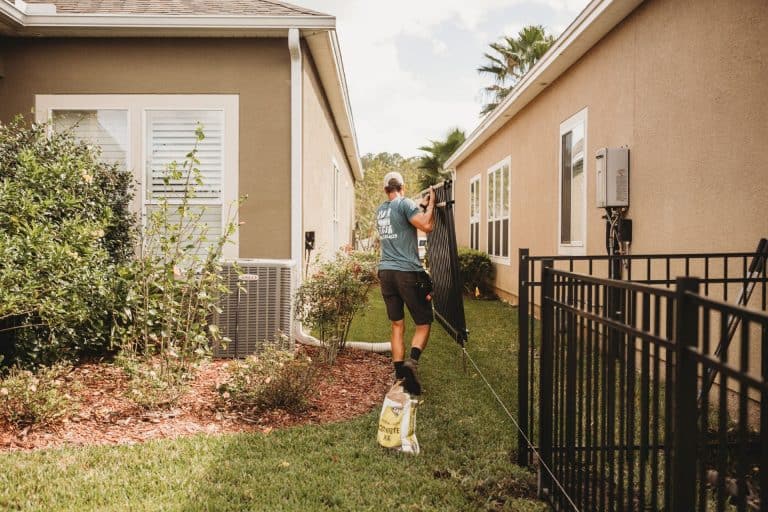
Jax AA Fencing installs code-compliant aluminum pool fencing across Northeast Florida, including Nocatee and Fleming Island. We are veteran-owned and operated, we handle the gate hardware that inspections actually hinge on, and every project starts with a free on-site estimate. If you are putting in a pool or replacing the fence around one, we will make sure the barrier is something you never have to think about again.